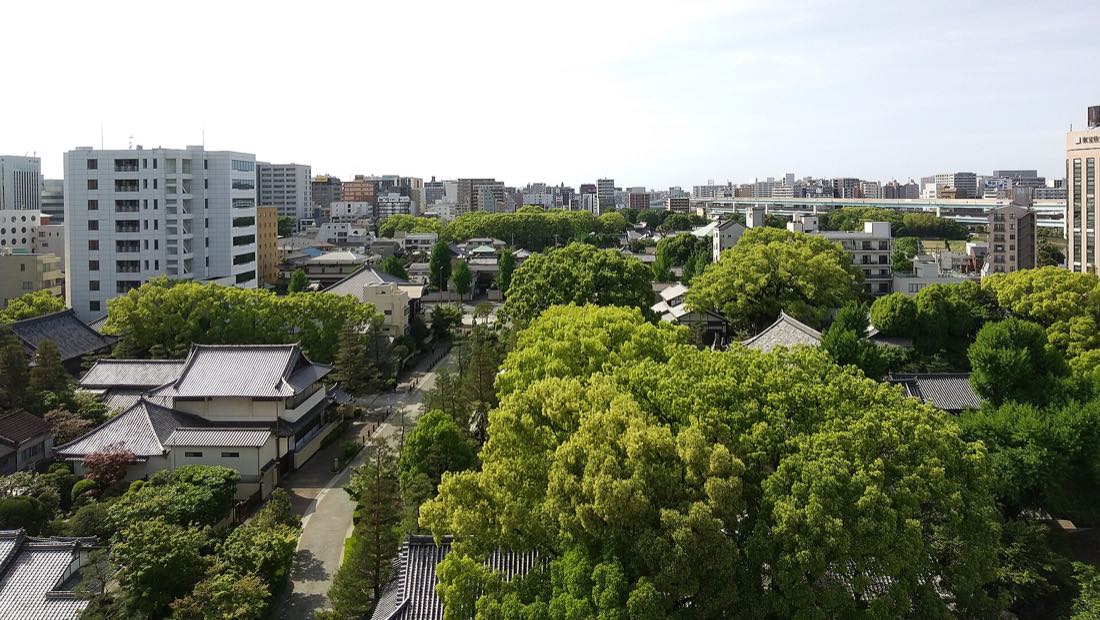
One day in Fukuoka:
old town, ramen, yatai.
Fukuoka's best day costs ¥650 in admissions and ends at a food stall. Skip the tower, skip the islands — walk the temple district, eat tonkotsu at its source, and be at a yatai by 18:00.
One day in Fukuoka works because the city is flat, compact and cheap: morning on the Hakata temple circuit (3.5 km, ~75 minutes of walking, ¥650/~$4.35 in total admissions), tonkotsu ramen for lunch, Ohori Park and the castle ruins in the afternoon, and a yatai counter from 18:00. Total transport: two subway hops, about ¥420 (~$2.80). What you cut: Fukuoka Tower, the islands, every day trip — those need day two.
The old town on foot — ¥650 covers everything
MorningKushida Shrine — the Yamakasa float
Fifteen minutes on foot from the station, or one Nanakuma-line stop to Kushida-Jinja-mae. The city's guardian shrine keeps a full-size one-tonne festival float on permanent display; the grounds are free and quiet before 9:00. Detail: Kushida Shrine.
Tochoji — the giant Buddha and the hell walk
Eight minutes' walk. A 10.8 m wooden Buddha — Japan's largest seated one — and a pitch-black hell-and-paradise corridor under it, for a ¥50 (~$0.35) offering. The single best near-free sight in the city: Tochoji.
Shofukuji and Jotenji — the firsts
Japan's first Zen temple (1195, grounds free — the buildings are a working monastery, so you walk, not enter) and the temple whose stone claims udon, soba and manju entered Japan here. Ten quiet minutes each.
Rakusuien — the ¥100 garden, tea if you're early
A pocket Meiji merchant garden behind a clay-and-tile Hakata wall: ¥100 (~$0.67) in, ¥500 (~$3.35) for matcha and a sweet in the tea room. Closed Tuesdays. The best hundred yen in Fukuoka.
Ramen at the source, then the arcade
MiddayTonkotsu lunch — before the queues
Eat the city's dish where it was born. Ichiran's original store is in Nakasu and locals defend it; Shin-Shin in Tenjin is the counter-argument. Either way eat a real lunch — yatai portions tonight are small. The full ranking: ramen in Fukuoka.
Kawabata arcade and Canal City — walk through, don't plan around
Kawabata is Hakata's oldest covered shopping street; Canal City is a 3.1-rated mall with a genuinely good free water-and-light show. Thirty minutes each, on the way west: Canal City, honestly.
Ohori Park and the castle ruins
AfternoonOhori Park — the #1-rated sight in the city
A 2 km lake loop the whole city shares. TripAdvisor's top Fukuoka attraction is this park — that tells you what kind of city this is, and it's better news than it sounds. Detail: Ohori Park.
Fukuoka Castle ruins — free, best in sakura season
Stone walls, no keep — expect terraces and view platforms, not a castle. Free, adjoining the park, superb in late March: castle ruins.
Back east — drop your bags, find cash
Subway back (¥210), konbini stop for cash and the toilet — yatai are cash-only and have neither. Cards and contactless work fine in Fukuoka's stations, malls, konbini and restaurants — the subway gates even take foreign contactless cards directly. The cash line is drawn exactly where you want to eat: yatai are cash-only, and so are some ramen counters and market stalls. Carry ¥5,000–10,000 in cash for a food night and you're covered.
The yatai night — 18:00 sharp
EveningFirst stall — sit before the queues form
Be seated at opening. By 19:30 the popular stalls have lines. Favour the Tenjin or Nagahama rows over the Nakasu riverside postcard shot; plan 2–3 stalls at 45–60 minutes each, ¥2,000–3,000 (~$13–20) per stall for two. The rules: the yatai guide.
Last pass — the river lights from a bridge
Cross the Naka River for the neon-on-water shot, then walk or subway home — the subway stops around midnight, and after that it's a ¥1,000–2,000 (~$6.65–13.35) taxi. Where that matters for your hotel: Hakata or Tenjin.
What one day deliberately skips — and why
The cutsFukuoka Tower is a 3.9-rated ¥1,000 (~$6.65) observation deck 25 minutes from everything else on this route — sunset-only value at best. The islands and Uminonakamichi eat half a day in transit. Every day trip — Dazaifu included — belongs to a second day. If you have one, take the 2-day plan instead; if you're deciding whether Fukuoka deserves the day at all, that's its own page.
One day in Fukuoka, answered
FAQPage schema pairedIs one day enough for Fukuoka?
Enough for the old town, the ramen and a yatai night — the three things the city does better than anywhere in Japan. It is not enough for any day trip, the tower or the islands. Two days is the honest recommendation; one day is a good edit, not a compromise ruined.
Can I do this with luggage?
Yes — coin lockers at Hakata Station take cases, and the route loops back east by evening. If you're between flights rather than staying over, use the layover playbook instead; it budgets the airport legs properly.
What does the whole day cost?
Admissions ¥650 (~$4.35), subway about ¥420 (~$2.80), ramen lunch ¥1,000–1,500 (~$6.65–10), yatai evening ¥3,000–4,000 (~$20–27) per person. Call it ¥5,500–6,500 (~$37–43) for a very full day — with a matcha thrown in.
What if it rains?
The morning circuit works in light rain — temples, arcades and the covered tea room. In real rain, swap the afternoon for the underground city and a ¥200 museum, and know that a hard-rain evening closes yatai stalls: the wet-day ranking is at rainy-day Fukuoka.
Should I add Fukuoka Tower at sunset?
Only if the sky is doing something special and you'll sacrifice the 18:00 yatai start — the tower is 25 minutes west of the route by bus, ¥1,000 (~$6.65), rated 3.9 by its own visitors. The free alternative: ACROS Fukuoka's step garden earlier in the day, in free Fukuoka.
Sunday problem: are the yatai even open?
Many stalls take Sunday or Monday off, and cold or heavy-rain nights thin the rows further — it's the most common single-day failure. If the counters look sparse, the fallback is a motsunabe or mizutaki restaurant, which in winter is arguably the better dinner anyway. Stall-by-stall logic: yatai guide.