The best of Fukuoka
costs almost nothing.
The city's number-one rated sight is a free park, its best temple costs ¥50, and the whole old-town circuit runs ¥650. Here is a full Fukuoka day for the price of a coffee, ranked, with every entry timed from Hakata Station.
A complete Fukuoka day costs between nothing and ¥650 (~$4.35). The city's top-rated attraction is a free park; the old-town temple circuit is 3.5 km and only ¥150 (~$1) if you pay just Tochoji's ¥50 (~$0.35) Buddha hall and Rakusuien's ¥100 (~$0.67) garden — the famous ¥650 headline adds the ¥200 folk museum and the ¥300 shrine museum, and right now the folk museum isn't worth it. Add the free ACROS step garden, Kego Shrine behind the department stores, Momochi beach at sunset and the Nakasu river lights, and your only real spend is ¥210–260 (~$1.40–1.75) a subway hop.
In Fukuoka, free isn't the budget option — it's the best option
Why this page is short on excusesMost cities make you choose between the cheap day and the good day. Fukuoka's review data quietly refuses to.
Fukuoka has no marquee monument, and the review data is blunt about it: TripAdvisor's #1 attraction here is a park, #4 is an underground shopping mall, and #6 is the train station. That is not a failure — it's the brief. You come to Fukuoka to eat at the source (tonkotsu ramen, motsunabe, yatai counters at midnight), to feel a young, walkable city, and to use the best-connected base in Kyushu. Plan it as a food-and-base city and it over-delivers; hunt monuments and you'll be gone by noon.
Read that as a price list and the day plans itself: the #1 attraction is free, the #4 is an underground shopping street that costs nothing to walk, and the one paid sight everybody names — the ¥1,000 (~$6.65) tower — is rated 3.9 by its own visitors, below the park, the shrine and the station. Every entry below carries its real price in ¥ and $ and its travel time from Hakata Station, so you can build a day without a spreadsheet. Where a paid ticket genuinely wins, we say so: the full ranked list doesn't sort by price.
Every price on this page was checked in early August 2026 against official or primary sources. Japanese attraction prices move and English sources go stale fast; where we couldn't verify a number, we say so instead of guessing.
Eleven free and near-free Fukuoka plays
Ranked, cheapest thing that's actually good firstOhori Park at dawn
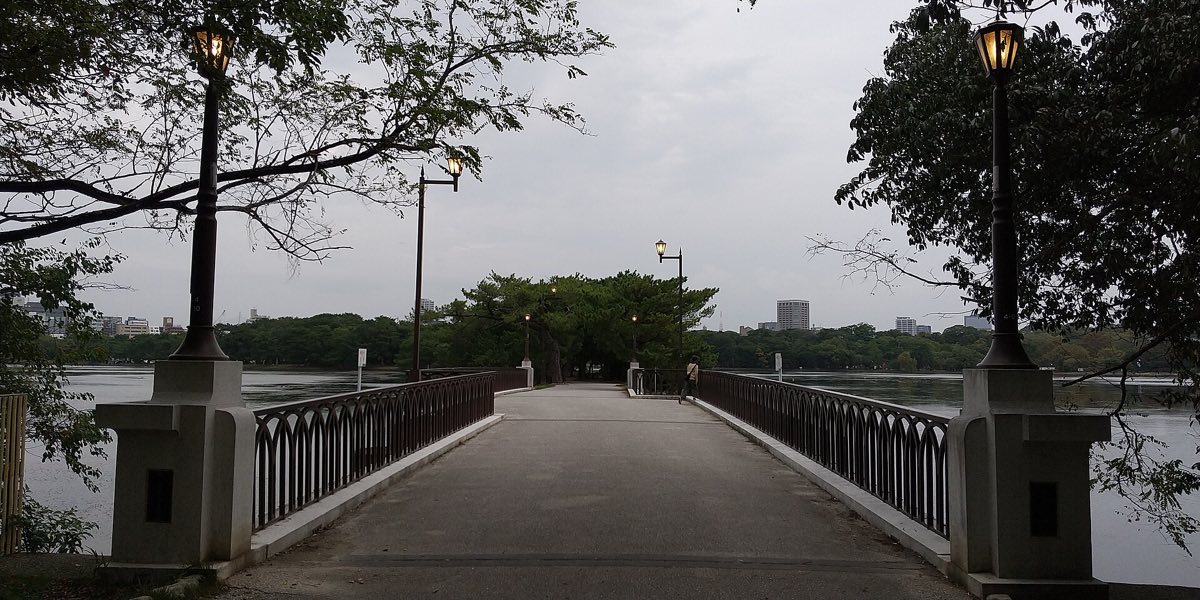
TripAdvisor's number-one Fukuoka attraction is a lake with a path around it: exactly 2.0 km, 30–40 minutes at a walk, open 24 hours, and it was the castle's outer moat, which explains the odd shape. Go at dawn — the loop belongs to runners and dog-walkers, the light sits on the water, and the lakeside Starbucks queue that ruins the 11:00 version hasn't formed. Ohorikoen Station, exits 3 or 6, two minutes.
The Hakata temple circuit — ¥150 the honest way
Kushida Shrine's grounds and its permanent one-tonne festival float: free. Shofukuji, Japan's first Zen temple (1195), grounds: free. Jotenji's stone claiming udon, soba and manju entered Japan there: free. Tochoji's 10.8 m wooden Buddha and pitch-black hell walk: ¥50 (~$0.35). Rakusuien's Meiji garden: ¥100 (~$0.67), closed Tuesdays. Eight sights, about 75 minutes of flat walking — start at Tochoji.
ACROS Fukuoka step garden
A 60-metre planted staircase of roughly 50,000 plants climbing the south face of a concert hall, open 9:00–18:00 March–October and 9:00–17:00 November–February. The detail almost every guide omits: the rooftop observation deck at the top opens weekends and public holidays only. Weekday visitors get the terraces, not the summit — plan accordingly.
Kego Shrine, behind the department stores
A working shrine wedged directly behind Solaria Plaza in the middle of Tenjin's shopping blocks, two minutes from Tenjin Station, open daylight hours. It is the single most Fukuoka image available: salarymen bowing between a department store and a bus lane. There's a rooftop footbath above the shrine office — we couldn't verify its current hours or fee, so treat it as a bonus rather than a plan.
Momochi beach at sunset
Two and a half kilometres of manufactured white sand behind Fukuoka Tower, rated 3.9 — the mediocre score is people noticing it's artificial. It faces west over Hakata Bay, which is the entire point: arrive 30 minutes before sunset, walk out to the Marizon pier, and skip the ¥1,000 (~$6.65) ticket for the deck above you.
Kawabata Arcade and its second festival float
Hakata's oldest covered shopping street runs straight out of Nakasu-Kawabata Station exits 5 and 7 and connects the old town to Canal City in a three-minute walk. Halfway along, Kawabata Zenzai Hiroba (11:00–18:00) keeps a second full-size kazariyama float on year-round display, free to stand under. The famously sweet red-bean zenzai itself runs a limited schedule we couldn't confirm — about ¥500 (~$3.35) if it's on.
Nakasu river lights after dark
Neon on moving water and the lit lanterns of the yatai row: the city's signature image costs nothing from the Haruyoshi-bashi or Nishi-Ohashi bridges. Two honest notes — the district rates 3.8 and the photograph is better than the meal, and after about 23:00 Nakasu is a working red-light quarter with touts on the pavement. Walk it early; eat in Tenjin.
Hakata Traditional Craft and Design Museum
Hakata-ori textiles, Hakata dolls and a one-eighth-scale Yamakasa float, 10:00–18:00, closed Wednesdays, right by the station. It beats the ¥200 (~$1.35) Hakata Machiya Folk Museum for one specific reason: Machiya's flagship live weaving demonstrations are suspended under a notice dated 25 June 2026, so the ¥200 now buys the exhibition without the thing you came for.
The four free viewpoints
Hakata Port Tower (free, 10:00–20:00, closed Wednesdays); the JR Hakata City rooftop (free, 10:00–22:00, with a tiny railway shrine and a train-watching deck); the Prefectural Government 11F lounge (free, 8:30–17:15, weekdays only); and the airport's 4F observation deck (free, 7:00–22:00). Fukuoka's skyline is low-rise, which is why the ¥1,000 (~$6.65) tower reads as expensive to its own visitors.
Fukuoka Castle ruins and Maizuru Park
Stone walls, terraces and a keep platform with a view — and no keep, so calibrate before you go. Free, never closed, attached to Ohori Park, and genuinely good in late March when the cherry trees go over. The rest of the year it's a pleasant twenty minutes on the way to the park, not a destination.
Nishi Park in sakura season
Over 1,000 cherry trees on a bay-side hill, one of Japan's designated top-100 blossom sites, with Terumo Shrine and a lookout over Hakata Bay at the top — better blossom and less event machinery than Maizuru. There is no station at the park: it's a 15-minute walk from Ohorikoen. For the other 48 weeks of the year, skip it.
Every paid ticket has a free understudy — here's which wins
The swapsFour of these swaps are straight upgrades. One isn't: pay the ¥100 (~$0.67).
| The paid option | Price | The free alternative | Verdict |
|---|---|---|---|
| Fukuoka Tower deck | ¥1,000 (~$6.65) | ACROS rooftop (weekends) or the Hakata City roof | SWAP IT |
| Hakata Machiya Folk Museum | ¥200 (~$1.35) | Hakata Traditional Craft and Design Museum, by the station | SWAP IT |
| Ohori Park Japanese Garden | ¥250 (~$1.65) | Rakusuien at ¥100 (~$0.67) — the better garden | PAY ¥100 |
| Nokonoshima Island Park | ¥1,200 (~$8) | Nishi Park's 1,000+ cherry trees, in season only | SEASONAL |
| Kushida Shrine museum | ¥300 (~$2) | The grounds, the float and the 1,000-year ginkgo — free | DEPENDS |
| Fukuoka Tourist City Pass | ¥2,500 (~$17) | Pay per ride — a real city day is about ¥1,440 | SKIP |
Where the ¥650 (~$4.35) circuit figure comes from: Tochoji ¥50 + Rakusuien ¥100 + Machiya ¥200 + the optional Kushida museum ¥300. Drop the two museums and the same eight sights cost ¥150 (~$1). The float in Kushida's grounds is up year-round except June, when the new ones are being built for 1 July.
A ¥150 day, in order — and the two traps that cost you money
Build the daySequence it like this: Ohori Park at dawn, subway east (¥260/~$1.75), the temple circuit from Tochoji through Kushida on foot, a ¥700–1,000 (~$4.70–6.65) bowl of tonkotsu — the genuine local price, and Tabelog clusters an extraordinary number of Fukuoka's top-rated shops under ¥999 — then Kawabata Arcade, the ACROS terraces in Tenjin, Momochi for sunset if the sky is behaving, and the Nakasu bridges after dark. Admissions: ¥150 (~$1). Transport: three subway hops, about ¥700 (~$4.65). Everything else is food, and money in Fukuoka has the rest of the arithmetic.
Skip the Fukuoka Tourist City Pass. It costs ¥2,500 (¥2,800 with Dazaifu) and a realistic city sightseeing day uses about ¥1,440 of actual fares — the pass loses you money, and it doesn't even cover the Dazaifu 'Tabito' liner. Older guides quote roughly half the current price; they're stale. Pay per ride, or use a contactless card at the gates.
The city-centre flat bus fare is ¥150 — it went up from ¥100 on 1 July 2021, and 2026-dated guides still print the old number. Hakata Station to Tenjin by subway is ¥210; the bus is ¥150 in the flat zone.
The second trap is the yatai, and it's a softer one. A stall evening is the city's signature night out, but it is not a cheap night out — and on a budget day it can quietly double your spend. Honest yatai numbers: the stalls average 3.5/5 across ~757 reviews, and Nishinippon Shimbun — the local paper — ran an investigation headlined 'Are there rip-off yatai?', concluding the tourist-facing Nakasu riverside row is where the price complaints live. Official average spend is ¥1,923 (~$13). The fix is simple: favour the Tenjin and Nagahama stalls over the Nakasu postcard row, ask prices before ordering, carry cash, expect a one-drink minimum, and don't camp the seat — it's a counter, not a restaurant.
Nothing here needs booking — this is what the guided version costs
The paid upgrade, priced honestlyYou can walk every stop on this page for the price of a subway ticket. Book only if you want the history layer narrated: the Yamakasa politics, the Zen-and-tea origin story, the udon argument.
Free Fukuoka, answered
FAQPage schema pairedWhat can you actually do in Fukuoka for free?
More than in any comparable Japanese city, because the good things here aren't ticketed: Ohori Park (2.0 km loop, open 24 hours), Kushida Shrine's grounds and its permanent festival float, Shofukuji and Jotenji, Fukuoka Castle's ruins, the ACROS step garden, Kego Shrine in the middle of Tenjin, Momochi beach, Kawabata Arcade and the Nakasu river lights after dark. That is a full day at ¥0 in admissions.
How much is the Hakata temple circuit really?
¥150 (~$1) for the version most people want: ¥50 (~$0.35) at Tochoji's Buddha hall and hell walk, ¥100 (~$0.67) at Rakusuien's garden, with Kushida, Shofukuji and Jotenji free. The ¥650 (~$4.35) figure you'll see quoted adds the ¥200 Machiya folk museum and the ¥300 Kushida museum. Route and hours: the temple walk.
Is there a free observation deck in Fukuoka?
Four of them. Hakata Port Tower (10:00–20:00, closed Wednesdays), the JR Hakata City rooftop (10:00–22:00), the Prefectural Government Building's 11F lounge (8:30–17:15, weekdays) and the airport's 4F observation deck (7:00–22:00). The ACROS step garden's summit deck is free too, but weekends and public holidays only — that catch is why we rank it below the others.
What's the cheapest way to get around Fukuoka?
The city-centre flat bus fare is ¥150 — it went up from ¥100 on 1 July 2021, and 2026-dated guides still print the old number. Hakata Station to Tenjin by subway is ¥210; the bus is ¥150 in the flat zone.
Can you eat cheaply in Fukuoka?
Yes, and it's the point of the city: a genuine local bowl of tonkotsu is ¥700–1,000 (~$4.70–6.65), and Tabelog's price bands put a remarkable number of Fukuoka's highest-rated ramen shops under ¥999. Yanagibashi Rengo Market (08:00–18:00, founded 1916) sells mentaiko tamagoyaki for ¥300–500 (~$2–3.35). The expensive food night is the yatai, at ¥1,923 (~$13) average spend a stall: the yatai guide.
What's free on a rainy day?
Tenjin Chikagai — 590 m of arched, stone-paved underground arcade linking Tenjin's stations and department stores — costs nothing to walk end to end, and the Asian Art Museum's 7F Art Cafe (9:30–19:30, closed Wednesdays) lets you sit with 10,000 books without a ticket. The craft museum by Hakata Station is free and dry too. Ranked wet-day options: rainy-day Fukuoka.
Is Fukuoka cheap compared with the rest of Japan?
Meaningfully, yes — midrange hotels run ¥8,000–13,000 (~$53–87), roughly 30–35% under Tokyo for the same standard, and the sightseeing barely registers. The one place Fukuoka isn't cheap is a booked-out weekend: Korean and Taiwanese weekenders drive the crush, so a Monday–Wednesday stay is the real discount. Money in Fukuoka has the numbers.