Hakata & Gion:
the most atmosphere per yen.
The station side runs your logistics; Gion, ten minutes' walk northwest, supplies the 700-year-old temple lanes the station blocks lack. Same booking search, two different trips.
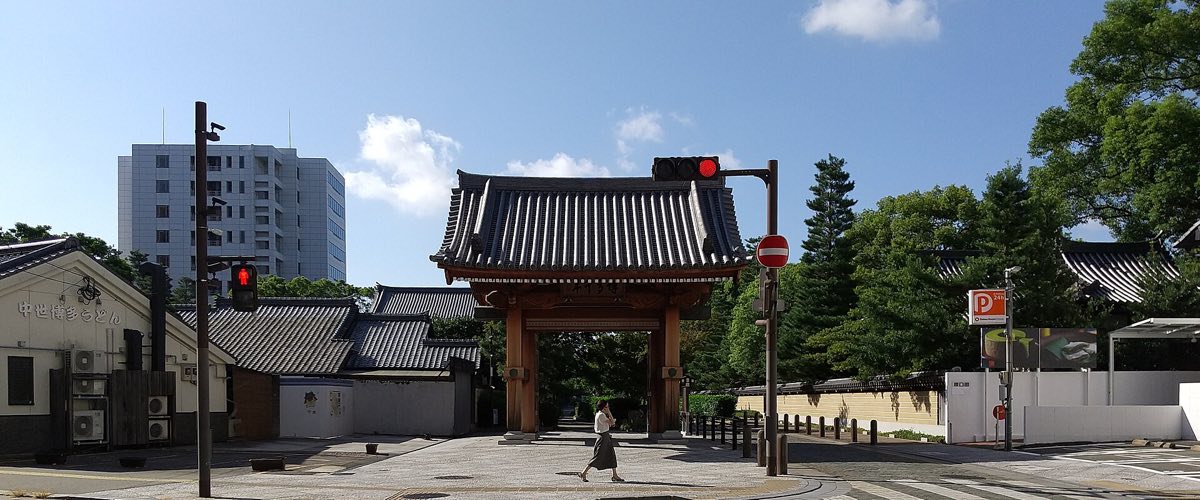
Sleep on the Hakata side and you get both of Fukuoka's best deals at once. The station is the logistics champion — airport in 5 minutes (¥260/~$1.75), shinkansen upstairs, the widest spread of business hotels at ¥9,000–22,000 ($60–147). Gion, ten minutes' walk northwest, is the atmosphere champion: Tochoji, Kushida Shrine and Japan's first Zen temple at the doorstep, nights genuinely quiet, and rooms at ¥8,000–15,000 ($53–100) — the most feel per yen in Fukuoka. Dormy Inn Hakata Gion, from ¥8,910 (~$59), is the single most word-of-mouth-recommended hotel in the city. The trade-off: the bars are a subway ride away, and the subway stops around midnight.
Why the station isn't called Fukuoka
The name on your ticketHakata was here first — a merchant port trading with China and Korea for a thousand years before Fukuoka existed.
In 1600 the warlord Kuroda Nagamasa built his castle on the west bank of the Naka River and named his new town Fukuoka, after his family's ancestral land in Bizen. For 290 years the two towns faced each other across the river: Hakata the merchant east bank, Fukuoka the samurai west. The 1889 merger should have settled the name Hakata's way — it was the bigger half, 25,677 people to Fukuoka's 20,410, and held 17 assembly seats to Fukuoka's 13.
At the naming vote in February 1890, four Hakata legislators didn't show up. The result was a 13–13 tie, broken by the chairman — a former samurai of the Fukuoka domain. Fukuoka took the city; Hakata took the consolation prize of the newly opened railway station, which is why your shinkansen ticket still says Hakata today. (A local rumour has the four absentees locked in the toilets — retold in Hakata with feeling, proven nowhere.) Locals never quite forgave it, and the merchant town's name still carries the culture: Hakata ramen, Hakata dolls, Hakata Gion Yamakasa.
For your booking, the upshot is simple: 'Hakata' hotels sit in the old merchant half, nearest the station and the temples — the side this page covers. The castle side's descendant is Tenjin & Daimyo.
What you can walk to before breakfast
At the doorstepGion's calling card is the temple circuit: 3.5 km, about 75 minutes of walking, ¥650 (~$4.35) in total admissions — the best cheap morning in Japan's big cities.
| Stop | From Gion Station | Cost | Verdict |
|---|---|---|---|
| Tochoji & the giant Buddha | 1 min | ¥50 | WORTH IT |
| Kushida Shrine | 5 min | Free | WORTH IT |
| The full temple circuit | Starts here | ¥650 total | WORTH IT |
| Canal City | 10 min | Free | DEPENDS |
| Nakasu yatai row | 10–12 min | ¥1,923 avg spend | DEPENDS |
| Hakata Station city — Amu Plaza, KITTE, ramen floors | 8–10 min | Free to enter | WORTH IT |
Honest caveat about the station blocks themselves: guides call them 'corporate and busy rather than atmospheric', and that's fair for the north and east faces. But the Chikushi-guchi side south of the tracks is a good, unglamorous local izakaya-and-ramen zone at local prices — and Gion is ten minutes northwest. The station area has no soul; soul is a ten-minute walk away. That's a different verdict from 'Hakata is soulless.'
Is the Hakata side your side?
Who it suitsThe practical bit
Plan the stayStay search, aimed at Hakata
Book itOne search covers both flavours — filter by map: station cluster for logistics, the Gion blocks for temple lanes.
Hakata & Gion, answered
FAQPage schema pairedIs Hakata the same as Fukuoka?
Same city — Hakata is the main station, the eastern ward and the old merchant town's name; Fukuoka is the city and the airport. Your rail ticket says Hakata, your flight says Fukuoka, and they're five subway minutes apart. No decision needed, just vocabulary.
Is the Hakata Station area boring?
The blocks touching the station are corporate — true. But you're eight minutes' walk from Tochoji's giant Buddha, ten from Kushida Shrine, and the south-of-the-tracks izakaya streets are cheerfully local. Judge the area by its ten-minute radius, not its taxi rank.
Why stay in Gion instead of by the station?
Same walk-to-station convenience, better mornings: you wake up inside the temple district, do the circuit before the tour groups, and pay ¥8,000–15,000 ($53–100) for the privilege. It's the best value-for-atmosphere compromise in the city. The trade is limited nightlife within walking distance.
Is Dormy Inn Hakata Gion worth the hype?
The formula is real: natural hot-spring rooftop bath, sauna, and free 'yonaki' noodles served around 21:30–23:00, from ¥8,910 (~$59) a night. It's the most word-of-mouth-recommended midranger in Fukuoka. Book it early — everyone else has read the same reviews.
What's the catch with staying here during Yamakasa?
The festival's climax happens at Kushida Shrine at 4:59am on 15 July — on Gion's doorstep — so 1–15 July is the area's sellout fortnight and rates are reported to double. Book two to three months out, or aim for the other festival windows. Sleeping here on the 14th means the race is your alarm clock; set no other.
Can I do nightlife from Hakata?
Yes, with a plan: Nakasu's yatai are a 10–12 minute walk, Tenjin's bars a ¥210 subway hop — but the subway stops around midnight and the bars run to 2–3am. Either head home early, budget ¥1,000–1,500 ($7–10) for the taxi, or sleep in Tenjin instead.