Tochoji is the best
¥50 in Japan.
Tochoji houses the Fukuoka Daibutsu — a 10.8 m seated wooden Buddha, Japan's largest, with 5,000 small Buddhas ranked in the wall behind it — and a pitch-black hell-and-paradise walkthrough that is genuinely, properly dark. Grounds are free; the Buddha hall asks a ¥50 offering (~$0.35). It's open 9:00–17:00 every day, one minute from Gion Station and eight on foot from Hakata Station. Give it 30–60 minutes, go late afternoon on a weekday, and start the temple circuit here.
A giant Buddha the guidebooks keep missing
What it isFukuoka's most impressive interior sight hides behind a modest gate on Taihaku-dori, five minutes from the shinkansen tracks.
The Fukuoka Daibutsu was completed in 1988 — recent, and the temple doesn't pretend otherwise — but scale doesn't care about age: 10.8 metres of seated hinoki Buddha, the largest wooden seated Buddha in Japan, backed by a wall of 5,000 small statues. Photography of the Buddha is strictly prohibited, and the monks enforce it — which is half the reason the room still feels like a temple rather than a content set.
Under the statue runs the hell-and-paradise walk: painted hell scenes on the way in, then a corridor of total darkness where you feel your way along the rail. Touch the Buddha's wheel in the dark and, per the temple, paradise is yours. Travellers' verdict: “actually pretty scary,” and kids treat it as the best ¥50 haunted house in Japan.
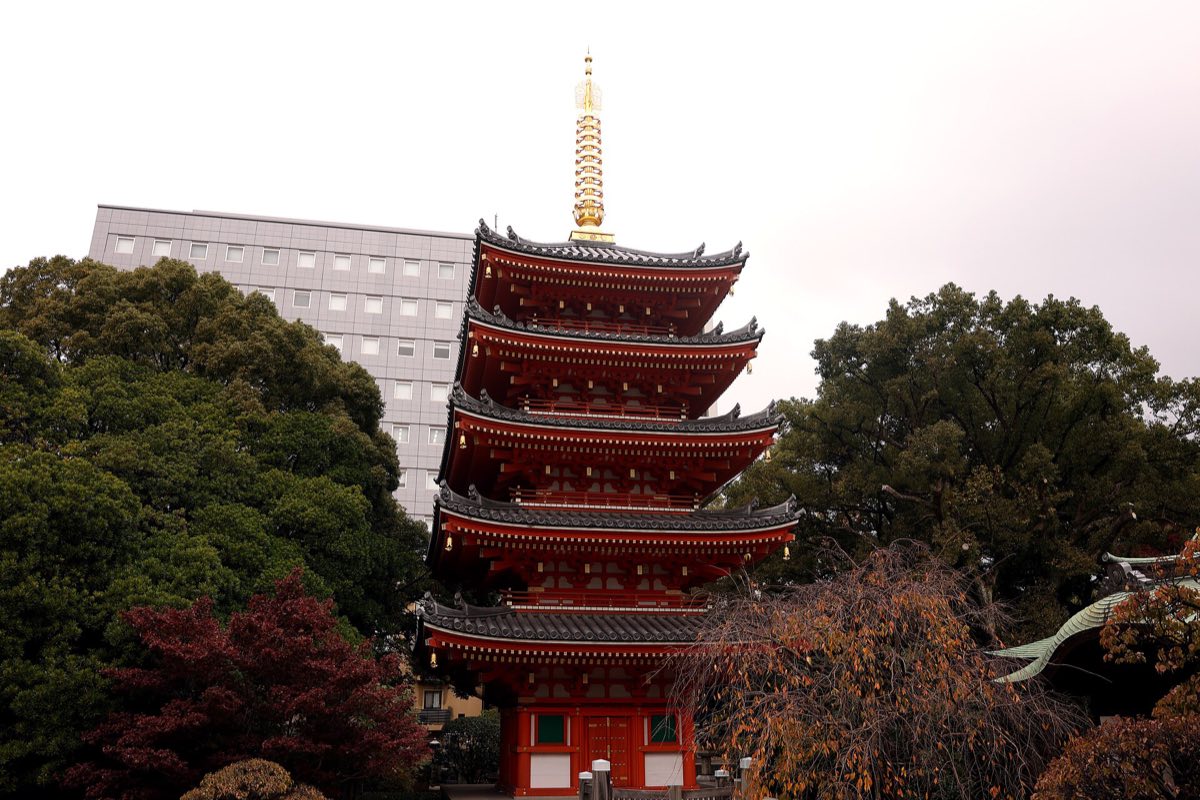
Outside, the 26-metre five-storey pagoda (2011) was raised with traditional nail-free joinery, and the hexagonal Rokkakudo holds revolving sutra shelves — one full spin credits you with reading every text inside. One reviewer's line the shrine down the road wouldn't love: “this temple more impressive than the Dazaifu shrine.”
Is Tochoji for you?
Who it suitsThe practical bit
Plan your visitTochoji vs the rest of the temple district
The circuitTochoji anchors a 3.5 km walking circuit whose entire admissions bill is ¥650 (~$4.35). Here's how the neighbours compare.
| Stop | Cost | Time | Verdict |
|---|---|---|---|
| Tochoji | ¥50 | 30–60 min | WORTH IT |
| Kushida Shrine | Free (museum ¥300) | 30 min | WORTH IT |
| Jotenji — the udon origin stone | Free | 10 min | WORTH IT |
| Shofukuji — Japan's first Zen temple | Free, grounds only | 10 min | DEPENDS |
| Rakusuien garden + matcha | ¥100 (+¥500 tea) | 30–45 min | WORTH IT |
| Hakata Machiya Folk Museum | ¥200 | 30 min | DEPENDS |
Shofukuji's buildings are closed to visitors — it's a working monastery. Ten minutes, free, on the way through. The Machiya museum's flagship loom demonstrations are suspended as of mid-2026; the free Hakata Traditional Craft and Design Museum by Hakata Station is the better craft stop right now. Full route: the temple walk.
Do the district with a guide
Go deeperYou don't need a tour for Tochoji itself. Book one if you want the history layer — the Yamakasa festival politics, the Zen-and-tea origin story — narrated as you walk.
Tochoji, answered
FAQPage schema pairedHow much does Tochoji cost?
The grounds are free; entering the Great Buddha Hall and the hell walk asks a ¥50 offering — about $0.35. Some older guides say free, some tours bundle “the entrance fee”: treat ¥50–100 as the honest number and carry coins.
Is the hell walk scary for kids?
It's genuinely pitch dark for a stretch — most kids love it, a few under-6s don't. You feel your way along a handrail; it's over in two or three minutes, and you can skip the corridor and still see the Buddha.
Can I photograph the Buddha?
No — photography inside the hall is strictly prohibited and actively enforced. Reviews that complain about this miss the point: it's why the room still feels sacred. The pagoda outside photographs beautifully instead.
How do I get there from Hakata Station?
Walk it: eight minutes up Taihaku-dori. Or one subway stop on the Kūkō line to Gion Station (¥210), Exit 1, and you're a minute away. Tochoji is the closest major sight to the station in the city.
How long does Tochoji take?
Thirty minutes covers the Buddha, the hell walk and the pagoda; an hour if you sit a while. Pair it with the rest of the circuit — Kushida Shrine is eight minutes' walk on — and you've filled a half day for ¥650 total.
When is it least crowded?
Weekday late afternoons, around 16:00 — tour groups do mornings. It closes at 17:00, so arrive by 16:15 to do the hall unhurried. New Year and Yamakasa fortnight (1–15 July) are the exceptions to every crowd rule in Hakata.
Related tickets, tours and stays
More ways to bookDeep links to specific products for the places on this page. Prices and availability are shown by each provider.