Eight sights, one flat walk,
¥650 all-in.
The Hakata temple walk is a flat 3.5 km circuit through the old merchant town: about 75 minutes of actual walking, 3.5–4.5 hours with stops, and ¥650 (~$4.35) in total admissions — Tochoji's Buddha ¥50, Rakusuien garden ¥100, the folk museum ¥200, Kushida's museum ¥300. It starts and ends at Hakata Station, needs no transport, and takes in Japan's first Zen temple, its largest seated wooden Buddha and the stone where udon entered the country. Short on time? The 90-minute core version runs Gion Station to Kushida for ¥250.
Kyoto charges ¥600 a temple. Hakata charges ¥650 for the district.
Why this worksThe whole circuit costs less than one Kyoto entry ticket, and the temple district is the one part of central Fukuoka that stays quiet.
Hakata's old town packs a genuinely strange amount of history into 800 metres: Shofukuji, founded 1195, is Japan's first Zen temple — its founder Eisai also brought tea back from China. Jotenji's stone monument claims the birthplace of udon, soba and manju. Tochoji holds the 10.8 m Fukuoka Daibutsu and its pitch-black hell corridor. Kushida keeps a ten-metre festival float on show all year but June. None of it is more than a few minutes' walk from the last thing.
Manage one expectation and the day lands: these are working temples, not show temples. Shofukuji's buildings are closed — it's a training monastery, so you get the gate, the pines and the quiet, ten minutes, free. The payoff sights are the interiors at Tochoji and the garden at Rakusuien, whose ¥100 ticket (add ¥500 for matcha in the teahouse) is the best hundred yen in the city.
The compressed version, for a layover or a cruise morning: Gion Station Exit 1 → Tochoji → Shofukuji → Kushida Shrine → out at Kushida Jinja-mae Station. Ninety minutes, ¥250 if you take Kushida's museum, flat the whole way. Every location on this site carries its subway line, station and exit — Fukuoka has three lines (Kūkō/Airport, Hakozaki, Nanakuma) and a flat, legible core. Much of the centre is genuinely walkable: Hakata Station to Kushida Shrine is 15 minutes on foot, Tenjin to Ohori Park about 20.
Hakata Station, clockwise, back to Hakata Station
The routeSumiyoshi Shrine
10 min walk from Hakata Station's Hakata exit. One of Japan's oldest Sumiyoshi shrines — the vermilion 1623 main hall claims to predate Osaka's. Free, 15 minutes.
Rakusuien
4 min on. A Meiji merchant's pocket garden behind a wall built from Hideyoshi-era rubble. ¥100 (~$0.67); matcha and a sweet ¥500 in the teahouse. Closed Tuesdays. The circuit's sit-down.
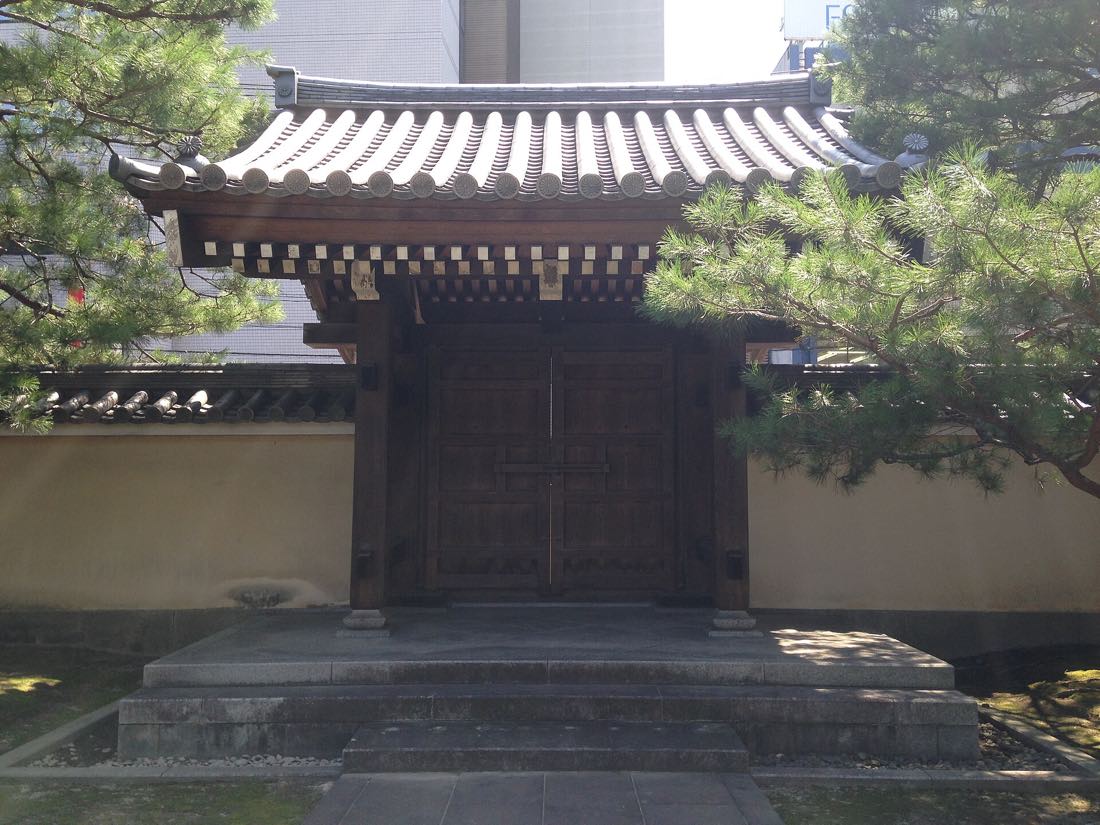
Hakata Sennen no Mon gate
10 min. The wooden ceremonial gate to the temple district — built 2014, and honest about it. Your establishing photo, one minute.
Jotenji
3 min. Founded 1242 by a monk back from Song China with milling technology — hence the stone declaring this the birthplace of udon, soba and manju. Free, 10 minutes.
Tochoji
5 min. The 10.8 m Fukuoka Daibutsu, 5,000 wall Buddhas and the hell-and-paradise walk in total darkness. ¥50. The single best stop — give it 30–45 minutes.
Shofukuji
5 min. Japan's first Zen temple, 1195 — and you can't go inside; it's a working monastery. Gate, gravel, pines, ten free minutes on the way through.
Kushida Shrine
8 min. Hakata's guardian shrine and the Yamakasa float on year-round display (absent June). Grounds free; museum ¥300. Twenty-five minutes.
Hakata Machiya Folk Museum — or the free swap
2 min. ¥200 for a relocated Meiji townhouse — but the flagship loom demonstrations are suspended as of mid-2026, so consider the free Hakata Traditional Craft and Design Museum by Hakata Station instead.
Kawabata arcade → Canal City → Hakata Station
Finish through Hakata's oldest shopping arcade (the Zenzai Hiroba float is here), catch a Canal City fountain show if one's due, and you're 15 minutes' walk from where you started.
Every admission on the circuit
The billEverything else on the route is free. Total: ¥650 (~$4.35) — less than one Kyoto temple.
| Stop | Cost | Time | Verdict |
|---|---|---|---|
| Tochoji Buddha hall + hell walk | ¥50 | 30–45 min | WORTH IT |
| Rakusuien garden (+¥500 matcha) | ¥100 | 30 min | WORTH IT |
| Kushida Shrine museum | ¥300 | 15 min | DEPENDS |
| Hakata Machiya Folk Museum | ¥200 | 30 min | DEPENDS |
| Shofukuji, Jotenji, Sumiyoshi, Sennen no Mon, Kawabata | Free | 40 min | WORTH IT |
The Machiya museum's Hakata-ori weaving demos are suspended per its own notice of 25 June 2026, which knocks it to DEPENDS — the free craft museum near Hakata Station shows the textiles and a one-eighth-scale float instead. Every price on this page was checked in early August 2026 against official or primary sources. Japanese attraction prices move and English sources go stale fast; where we couldn't verify a number, we say so instead of guessing.
When the temple district is actually quiet
Hour clockTochoji's hall and Rakusuien open. The quietest full-access hour of the day.
Walk it with the history switched on
Guided optionThe circuit is free to do yourself with this page. A guide adds the layer you can't read off a plaque — Yamakasa's guild politics, why tea and Zen landed here first.
The temple walk, answered
FAQPage schema pairedHow long does the Hakata temple walk take?
About 75 minutes of pure walking over 3.5 km, and 3.5–4.5 hours with stops. The compressed core — Gion Station, Tochoji, Shofukuji, Kushida, out at Kushida Jinja-mae — is 90 minutes and ¥250, and fits a layover or cruise morning comfortably.
How much does it cost?
¥650 (~$4.35) if you enter everything: Tochoji ¥50, Rakusuien ¥100, the folk museum ¥200, Kushida's museum ¥300. Skip the two museums and the day costs ¥150. Add ¥500 for matcha at Rakusuien — the correct splurge.
Is it doable with a stroller or wheelchair?
Mostly, yes — the route is flat, paved and urban, and the GetYourGuide temple tours market themselves as wheelchair accessible. The hell walk at Tochoji is a narrow dark corridor with a handrail; skip that segment and everything else works.
What order should I walk it?
Clockwise from Hakata Station as laid out above, so Tochoji's interior lands mid-walk and you finish through Kawabata arcade near food. If you'd rather front-load the best bit, start at Gion Station — Tochoji is one minute from Exit 1.
Is Shofukuji worth it if you can't go inside?
As a ten-minute pass-through, yes — Japan's first Zen temple and the place tea cultivation entered the country deserves a stand-and-look. As a destination, no. Anyone who tells you to make a special trip hasn't been.
When's the best time of day?
Be walking by 8:30–9:00 or after 15:30 — the tour-group wave runs late morning to mid-afternoon. Halls close at 17:00 sharp, so a 16:00 start only works for the 90-minute core. In late November the Old Town Light Up Walk illuminates the temples in the evening — check that year's dates locally.
Where do I eat afterwards?
You finish next to the answer: Kawabata's zenzai stand for the famously oversweet red-bean soup (weekend-ish hours — a smile costs nothing when it's shut), Canal City's Ramen Stadium two minutes on, or hold out for a yatai counter at 18:00. The ramen decision: ramen in Fukuoka.
Related tickets, tours and stays
More ways to bookDeep links to specific products for the places on this page. Prices and availability are shown by each provider.